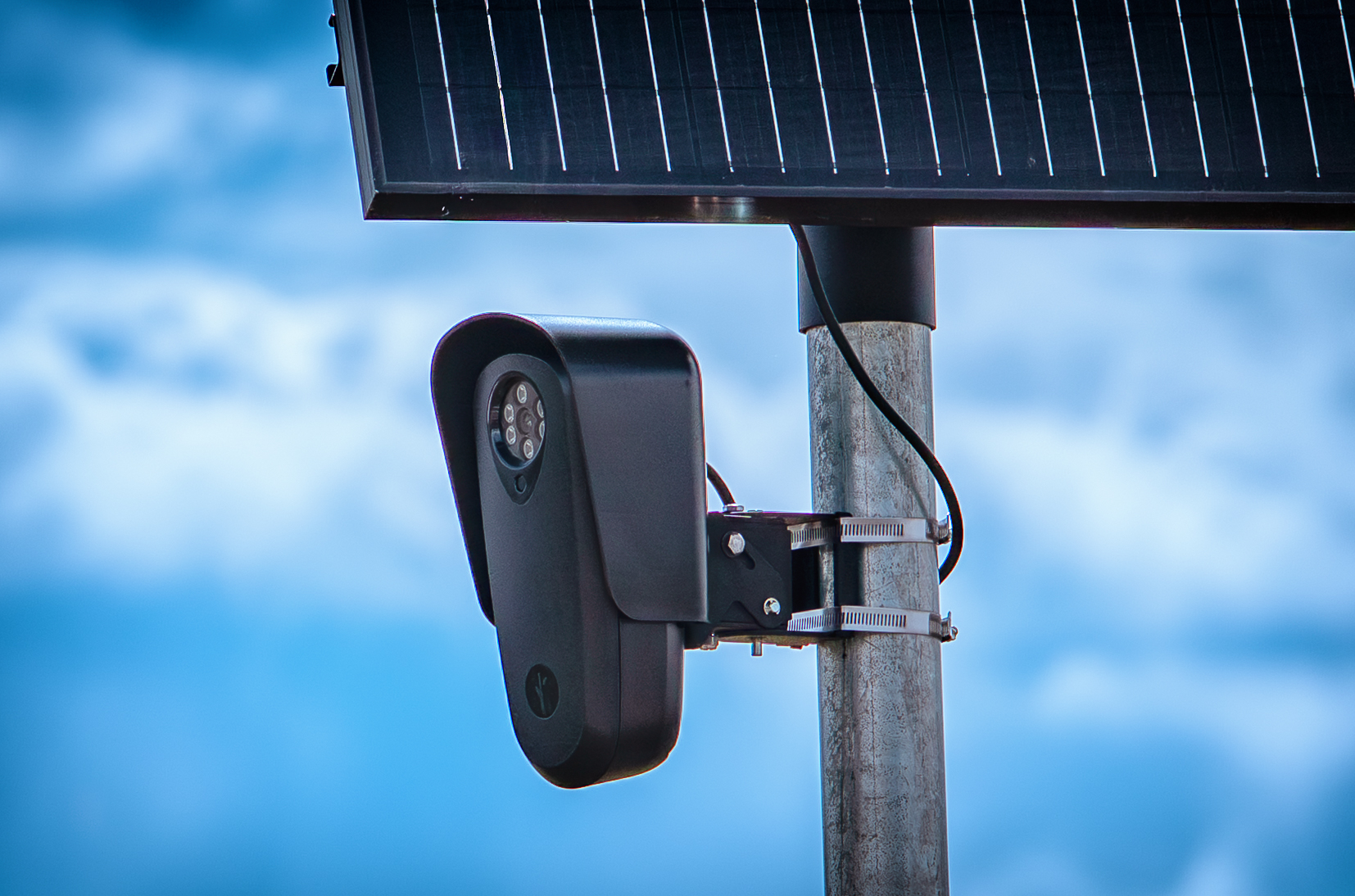
Haverford Township's police chief told commissioners the department refused to partner with Flock Safety, the license-plate camera company, because it shares surveillance data with private businesses.
Viola drew a clear line. At the Board of Commissioners meeting Tuesday, Sept. 8, Chief John Viola said Flock lets security companies, supermarkets and other private entities access its stored camera data, as Patch first reported.
"Flock allows their storage to be used by security companies, supermarkets — anybody that has the cameras," Viola told commissioners. "We wanted nothing to do with that."
Flock Safety markets its network of automated license-plate reader (ALPR) cameras to police departments, homeowners and businesses alike. The American Civil Liberties Union (ACLU) has campaigned against the company, arguing the cameras amount to warrantless mass surveillance. A Mother Jones investigation published in July found the Institute for Justice had identified at least 24 cases of officers using ALPR cameras to stalk romantic interests between 2024 and 2026. At least 30 municipalities canceled Flock contracts during 2025, according to that report.
Instead of Flock, Haverford Township Police use VIPR, an Exton, Pa.-based company that makes mobile and stationary ALPR cameras. Viola said the readers have been mounted in township police vehicles for at least a decade, and many Philadelphia-area departments use the same system.
The key difference, according to Viola: only authorized law enforcement can access VIPR data. Flock's system lets any entity with its cameras tap the stored information.
VIPR states on its website that it complies with Criminal Justice Information Services (CJIS) Security Policy, the FBI-driven standard for law-enforcement data security. The company says officer queries are auditable and policy-driven. VIPR also pledges it will never expand into facial recognition and retains data for one year.
Civil-liberties groups say the broader concern applies to all ALPR technology, not just Flock. The ACLU has noted that unlike traffic cameras triggered by speeding or red-light violations, ALPR cameras record every vehicle that passes, regardless of whether a crime has occurred.
The license-plate reader issue is not new in Haverford Township. At the Jan. 12 commissioners meeting, resident Mike Lee raised questions about the technology, and Commissioner Holmes responded, according to meeting minutes. The content of that exchange was not detailed in the minutes.
No response from Flock Safety to Haverford Township's decision appeared in public records as of publication. The number of VIPR cameras deployed in the township and the cost of the contract have not been disclosed.