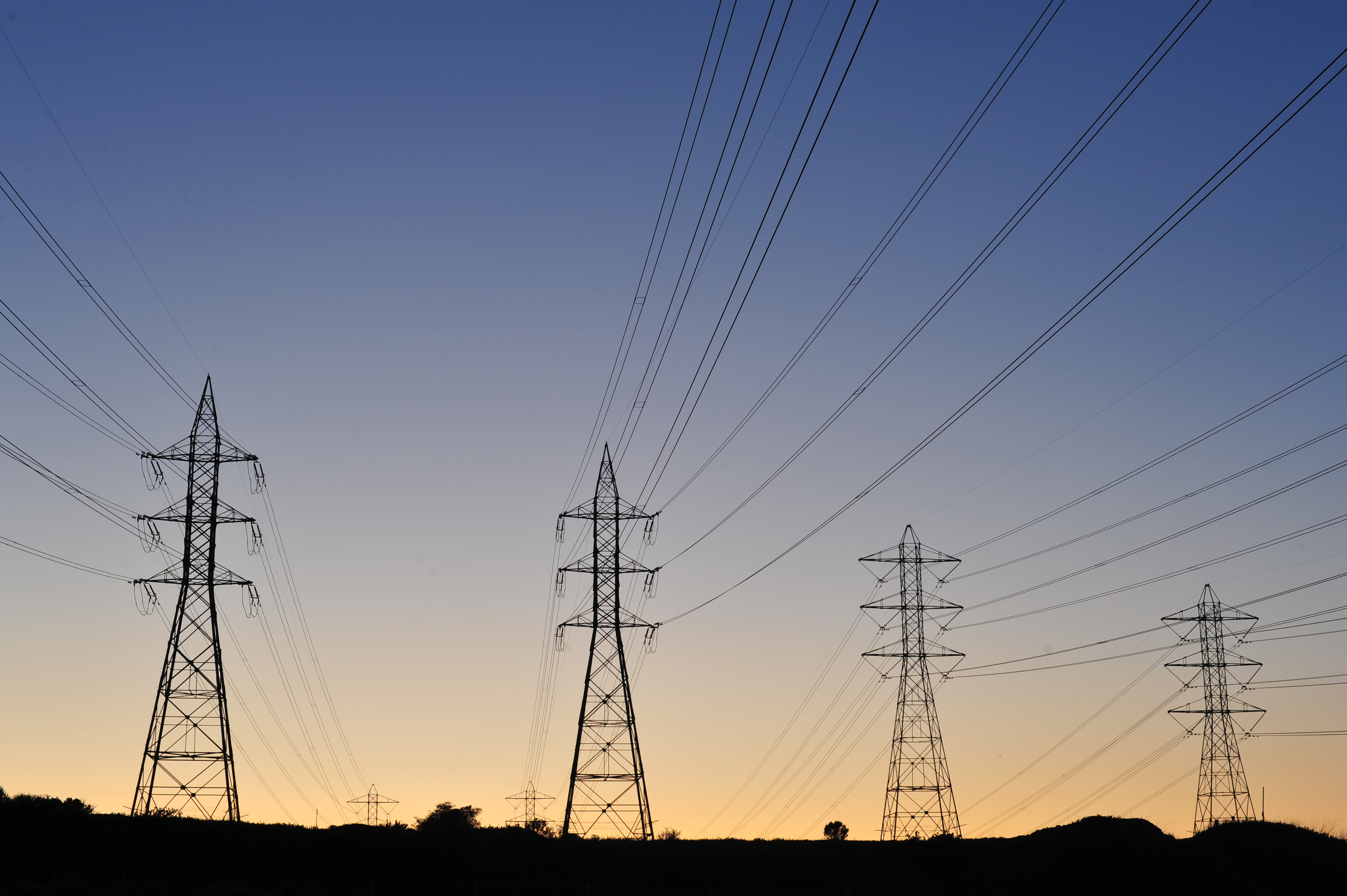
PECO customers in Radnor and Haverford townships face a growing risk of blackouts as data centers consume the region's electricity supply, a new state-commissioned study warns.
The Pennsylvania Public Utility Commission (PUC) on Monday, Sept. 14, released an analysis by Synapse Energy Economics projecting that by 2030, the regional power grid could fail to meet demand six times per decade. That's six times worse than the standard grid planners use, which aims to limit shortages to roughly one event every 10 years.
The worst case is far grimmer.
Under a scenario combining high demand with constrained development of new power generation, the study projects more than 13 potential loss-of-load events per year starting in 2030.
"If we keep hooking up data centers, but we don't get back in the business of building new supply, we could … be having some sort of blackout once a month on average, which is obviously completely unsustainable and would do serious harm to our lives," Abe Silverman, an energy consultant and research scholar at Johns Hopkins University, told WHYY.
Under the study's likely scenario, electricity demand across the PJM Interconnection grid will nearly double between 2025 and 2040, driven almost entirely by data centers. PJM manages the grid across 13 states, including Pennsylvania. PECO, which serves 1.7 million electricity customers in southeastern Pennsylvania, operates within PJM's territory.
The PUC cautioned that the projections do not predict a specific number of outages but illustrate the scale of the reliability risk if demand outpaces supply.
PJM's own recent capacity auctions underscore the concern. The grid operator's auction for the 2028–29 delivery year fell 6,831 megawatts short of the regional reliability requirement, according to Power Magazine.
In the likely scenario, outages would average about 47 minutes and could affect 4.2 million households across PJM's territory, PennLive reported.
How regulators are responding
PUC Chairman Steve DeFrank said in a written statement that the analysis sends a clear warning and called for urgent action at PJM, saying data center growth cannot come at the expense of families and businesses that already depend on reliable, affordable electric service.
PJM filed a petition with the Federal Energy Regulatory Commission (FERC) on Aug. 13 proposing a new framework called Interim Resource Adequacy Service (IRAS). Under the plan, new data centers over 50 megawatts that have not secured their own power supply would be first in line for load reductions during grid shortages, before existing residential and business customers lose power. PJM asked FERC to approve the changes by Oct. 12.
Gov. Josh Shapiro signed an executive order on Aug. 18 requiring data center developers to bring or buy their own new power to qualify for an easier permit-approval track.
The PUC itself has been moving on multiple fronts. On Thursday, Sept. 10, commissioners voted 5-0 to direct staff to draft updated emergency load control regulations, including clearer rules on which customers get cut first during shortages. A tentative order is targeted for the PUC's Oct. 1 public meeting, with a final order aimed for Jan. 28, 2027.
In May, the PUC established a model tariff requiring customers using 50 megawatts or more to bear the costs they add to the grid rather than shifting them to other ratepayers.
PJM spokesperson Jeff Shields told WHYY the grid operator agrees that demand driven by data centers is growing faster than new generation, potentially compromising reliability over the next five years while also contributing to increased electricity costs.
The PUC's Oct. 1 public meeting is the next milestone for residents tracking the issue.